
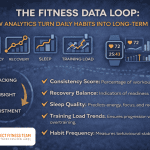
The Fitness Data Loop: How Analytics Turn Daily Habits into Long-Term Results
March 6, 2026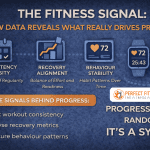
The Fitness Signal: How Data Reveals What Really Drives Progress
March 28, 2026
For years, fitness progress depended largely on motivation, willpower, and intuition. Today, the landscape has changed. Modern training is increasingly driven by analytics—data that reveals behavioural patterns and performance trends over time.
From wearable devices to structured training dashboards, fitness analytics allow individuals to transform raw effort into measurable improvement. Instead of guessing whether progress is happening, analytics help reveal why it is happening.
At Perfect Fitness Team, we view analytics as a bridge between effort and understanding.
1. The Rise of Data-Driven Fitness
Fitness technology has expanded dramatically in recent years. Devices and platforms now track a wide range of metrics, including:
- Daily movement patterns
- Training frequency and intensity
- Recovery indicators
- Sleep duration and quality
- Habit consistency
- Long-term performance trends
These data points provide insights that were previously invisible. By analysing these metrics together, individuals gain a clearer understanding of how behaviour influences outcomes.
Data shifts the fitness journey from emotional decision-making to evidence-based improvement.
2. Why Consistency Is the Strongest Predictor of Results
Among all fitness metrics, consistency remains the most powerful predictor of long-term progress.
Analytics platforms often measure consistency through workout frequency or adherence scores—the percentage of planned sessions completed over time.
When individuals maintain steady training patterns:
- Physiological adaptation improves
- Skill development accelerates
- Injury risk decreases
- Motivation becomes less dependent on mood
Consistency transforms fitness from an occasional effort into a structured lifestyle.
3. The Role of Recovery and Adaptation Metrics
Training stress must be balanced with recovery. Without adequate recovery, performance declines and burnout increases.
Analytics help monitor this balance by tracking indicators such as:
Recovery trends – showing readiness for physical activity
Resting heart rate patterns – indicating fatigue or adaptation
Sleep performance – predicting energy levels and cognitive focus
When recovery metrics are monitored consistently, training programs can adapt to maintain sustainable progress.
4. Behavioural Analytics and Habit Formation
Fitness success is fundamentally behavioural. Small decisions repeated daily shape long-term outcomes.
Habit analytics track behaviours such as:
- Workout completion
- Step goals
- Mobility routines
- Hydration habits
- Nutrition consistency
These metrics reveal whether behaviours are stable or irregular. Over time, analytics help reinforce identity-based habits—when individuals see consistent patterns, they begin to view themselves as disciplined and reliable.
This psychological shift often becomes the turning point in a fitness journey.
5. Turning Fitness Data into Strategic Decisions
Analytics become powerful when they guide action.
Some practical ways to use fitness data effectively include:
- Reviewing weekly training trends rather than daily fluctuations
- Adjusting intensity when recovery indicators decline
- Monitoring sleep patterns alongside performance changes
- Focusing on long-term consistency metrics rather than short-term results
By interpreting patterns rather than isolated numbers, individuals can make smarter training decisions.
Conclusion: The Future of Fitness Is Insight
Fitness analytics are not about obsessing over numbers. They are about creating clarity.
When behaviour is measured, patterns become visible.
When patterns are visible, improvements become strategic.
When improvements are strategic, progress becomes sustainable.
At Perfect Fitness Team, we believe that the strongest transformations happen when discipline is supported by insight. Analytics turn effort into understanding—and understanding into lasting results.