
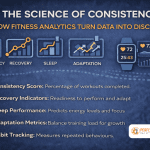
The Science of Consistency: How Fitness Analytics Turn Data into Discipline
March 13, 2026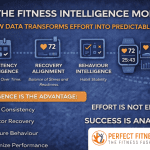
The Fitness Intelligence Model: How Data Transforms Effort into Predictable Results
April 3, 2026
Most people focus on outcomes in fitness — weight lost, muscle gained, calories burned.
But outcomes are lagging indicators.
The real drivers of progress are hidden beneath the surface — in patterns, behaviours, and signals that only analytics can reveal.
At Perfect Fitness Team, we focus on these signals — because when you understand them, you stop chasing results and start engineering them.
1. From Noise to Signal: Understanding Fitness Data
Fitness data is everywhere — steps, calories, workouts, heart rate, sleep scores.
But not all data is useful.
The key is identifying signal vs noise:
- Noise = daily fluctuations (bad workout, missed session, low energy day)
- Signal = patterns over time (consistency trends, recovery cycles, habit stability)
Analytics allow you to zoom out and see patterns that are invisible in day-to-day training.
And those patterns are what determine success.
2. The Three Core Signals That Predict Progress
Across fitness data platforms and behavioural studies, three signals consistently emerge as the strongest predictors of long-term results:
🔹 Signal 1: Consistency Density
Not just how often you train — but how regularly you train over time.
Analytics show that:
- Stable weekly patterns outperform irregular high-intensity bursts
- Gaps in training create regression cycles
- Consistency density (sessions per week over months) predicts adherence
👉 This is the strongest signal of long-term success.
🔹 Signal 2: Recovery Alignment
Recovery isn’t just rest — it’s alignment between effort and readiness.
Key data points:
- Sleep quality trends
- Resting heart rate
- Recovery scores / HRV
When training intensity aligns with recovery signals:
- Performance improves
- Injury risk drops
- Fatigue is managed proactively
👉 This is the signal of resilience.
🔹 Signal 3: Behaviour Stability
Fitness is behaviour repeated.
Analytics reveal:
- How often you follow through
- Where habits break
- When discipline drops
Behaviour stability = consistency of actions across days and weeks.
👉 This is the signal of identity.
3. Why Most People Fail Without Analytics
Without data, fitness decisions are based on:
- Mood
- Motivation
- Perception
- Short-term results
This leads to:
- Overtraining when motivated
- Skipping when tired
- Inconsistent routines
- Lack of feedback
Analytics remove this uncertainty by providing objective feedback loops.
4. How Analytics Build Mental Strength
Mental strength is not just mindset — it’s structure.
Analytics help build it by:
✔ Reducing emotional decision-making
✔ Providing clear feedback on progress
✔ Reinforcing discipline through visible patterns
✔ Creating accountability through tracking
When you can see your effort, you trust your process.
And trust builds consistency.
5. Turning Signals into Strategy
To apply analytics effectively:
📊 Track weekly, not just daily
📊 Focus on trends, not single data points
📊 Align training with recovery signals
📊 Prioritize consistency over intensity
📊 Measure habits, not just results
Fitness becomes predictable when behaviour becomes measurable.
Conclusion: Progress Is a Pattern, Not a Moment
The biggest mistake in fitness is focusing on outcomes instead of signals.
Results are delayed.
Patterns are immediate.
At Perfect Fitness Team, we help you focus on the signals that matter:
- Consistency
- Recovery
- Behaviour
Master these, and results follow naturally.
Fitness is not random.
It is a system.
And analytics is how you understand it.