
The Fitness Signal: How Data Reveals What Really Drives Progress
March 28, 2026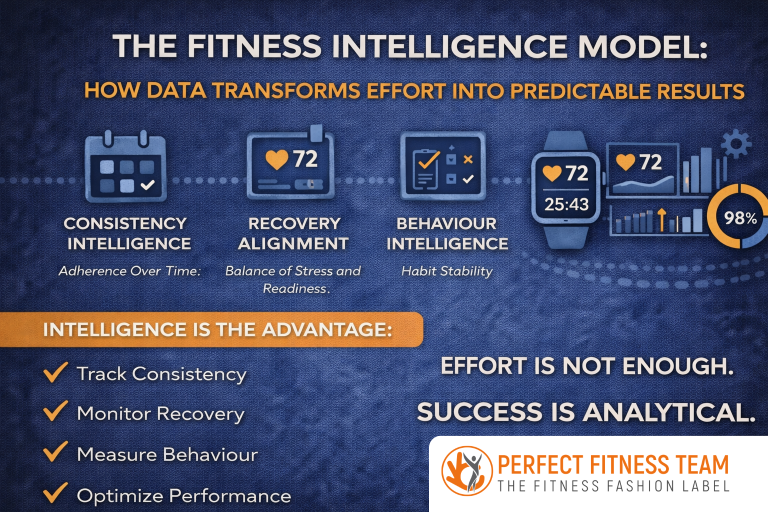
In traditional fitness, progress was often attributed to effort, discipline, and motivation. But in reality, effort alone does not guarantee results. What determines success is how that effort is structured, measured, and optimized over time.
This is where fitness analytics comes in.
At Perfect Fitness Team, we approach fitness through what we call the Fitness Intelligence Model — a system where data transforms random effort into predictable, repeatable outcomes.
1. From Effort to Intelligence
Most individuals train hard. Few train intelligently.
The difference lies in feedback loops.
Without analytics:
- Training decisions are reactive
- Progress is inconsistent
- Motivation fluctuates
With analytics:
- Decisions are data-informed
- Patterns are visible
- Behaviour becomes optimized
Fitness shifts from activity to intelligence-driven performance.
2. The Four Pillars of Fitness Intelligence
Analytics-driven fitness can be broken down into four core pillars:
🔹 1. Consistency Intelligence
This measures how reliably you execute your training plan.
Key insights:
- Regular training beats sporadic intensity
- Missed sessions create behavioural gaps
- Weekly adherence predicts long-term success
👉 The strongest predictor of results is not effort — it is repetition over time.
🔹 2. Recovery Intelligence
Recovery metrics reveal how your body responds to stress.
Tracked through:
- Sleep quality
- Resting heart rate trends
- Recovery/readiness scores
👉 Training without recovery awareness leads to burnout.
👉 Training with recovery intelligence builds resilience.
🔹 3. Behaviour Intelligence
Fitness is behaviour repeated.
Analytics track:
- Habit completion
- Routine stability
- Behavioural consistency
👉 Behavioural data reveals whether your system is sustainable or fragile.
🔹 4. Performance Intelligence
Performance analytics measure output trends:
- Strength progression
- Endurance capacity
- Training load balance
👉 This is where effort becomes visible — but only when supported by the other three pillars.
3. Why Most Fitness Journeys Fail Without Analytics
Without data, individuals rely on:
- Emotion
- Motivation
- Perception
This leads to:
- Overtraining during high motivation
- Inconsistency during low motivation
- Lack of clarity on progress
- Reactive rather than strategic decisions
Analytics remove subjectivity and replace it with objective feedback systems.
4. The Role of Analytics in Building Mental Strength
Mental strength is often misunderstood as willpower.
In reality, it is consistency supported by structure.
Analytics contribute to mental strength by:
✔ Creating accountability through tracking
✔ Providing clarity through measurable trends
✔ Reinforcing discipline through visible patterns
✔ Reducing emotional decision-making
When individuals see their progress in data form, they develop trust in the process — and trust builds resilience.
5. Turning Data into Actionable Strategy
To apply fitness analytics effectively:
📊 Focus on weekly trends, not daily fluctuations
📊 Track consistency before optimizing intensity
📊 Align training with recovery signals
📊 Identify behaviour gaps early
📊 Use data to guide decisions, not justify effort
Fitness is not built in isolated workouts.
It is built in patterns that repeat over time.
Conclusion: Intelligence Is the Competitive Advantage
In the modern fitness landscape, effort is no longer enough.
The real advantage lies in:
- Understanding patterns
- Interpreting data
- Making informed adjustments
At Perfect Fitness Team, we believe the future of fitness is not just physical — it is analytical.
Fitness is no longer just about working harder.
It’s about working smarter, consistently, and intelligently.
And analytics is what makes that possible.