
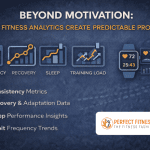
Beyond Motivation: How Fitness Analytics Create Predictable Progress
February 27, 2026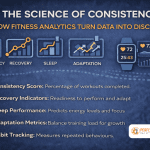
The Science of Consistency: How Fitness Analytics Turn Data into Discipline
March 13, 2026
Fitness success rarely happens by accident. Behind most sustainable transformations lies a set of repeatable behaviours that are monitored, adjusted, and refined over time.
Today, the difference between random effort and strategic progress is fitness analytics.
From wearable devices to training dashboards, data now helps individuals understand not only what they are doing, but how their behaviour patterns influence results.
At Perfect Fitness Team, we call this the Fitness Data Loop—a continuous cycle of tracking, learning, and improving.
1. Tracking: Making Behaviour Visible
The first step in analytics-driven fitness is simple: visibility.
Modern fitness tracking tools measure a wide range of behavioural metrics, including:
- Workout frequency
- Activity intensity
- Recovery indicators
- Sleep duration and quality
- Daily movement patterns
- Habit completion rates
When behaviour becomes measurable, it becomes easier to identify patterns. These patterns are critical because they reveal whether progress is sustainable or temporary.
Without tracking, improvement relies on memory and perception. With analytics, improvement relies on evidence.
2. Insight: Understanding the Patterns
Data alone does not create results—interpretation does.
Fitness analytics help identify key patterns that influence performance and consistency:
Consistency Trends
Workout frequency is one of the strongest predictors of long-term progress. Regular training patterns outperform sporadic high-intensity efforts.
Recovery Indicators
Metrics like resting heart rate trends or recovery scores help determine whether the body is adapting positively to training stress.
Sleep Performance
Sleep analytics often predict next-day performance. Poor sleep patterns correlate with reduced motivation, slower recovery, and decreased training output.
These insights allow individuals to adapt behaviour before performance declines.
3. Adjustment: Training Smarter
Once patterns are identified, analytics make it possible to adjust strategy.
Examples include:
- Reducing training intensity when recovery data indicates fatigue
- Improving sleep habits when performance dips
- Increasing training frequency gradually based on adherence trends
Rather than relying on guesswork, decisions become data-informed.
This approach reduces injury risk and increases long-term adherence.
4. Reinforcement: Building Identity Through Data
One of the most powerful benefits of fitness analytics is psychological.
Behavioural science shows that identity-based habits last longer than motivation-based actions.
Analytics reinforce identity through visible proof:
- Workout streaks reinforce discipline
- Habit tracking reinforces reliability
- Progress graphs reinforce improvement
Over time, individuals stop saying:
“I am trying to get fit.”
And start saying:
“I am someone who trains consistently.”
This identity shift is where real transformation happens.
5. The Five Analytics That Matter Most
While hundreds of metrics exist, the following five provide the strongest insight into long-term success:
Consistency Score
Percentage of planned workouts completed.
Recovery Balance
Indicators of readiness versus fatigue.
Sleep Quality
Predicts energy, focus, and recovery.
Training Load Trends
Ensures progression without overtraining.
Habit Frequency
Measures behavioural stability.
Together, these metrics form the Fitness Data Loop, where behaviour informs data and data refines behaviour.
Conclusion: Data Creates Discipline
Fitness analytics are not about obsessing over numbers.
They are about creating clarity.
When progress is visible, discipline becomes easier.
When patterns are measurable, adjustments become strategic.
At Perfect Fitness Team, we believe that sustainable fitness is built not only on effort—but on insight.
The future of fitness isn’t guesswork.
It’s data-informed discipline.