
The Fitness Intelligence Model: How Data Transforms Effort into Predictable Results
April 3, 2026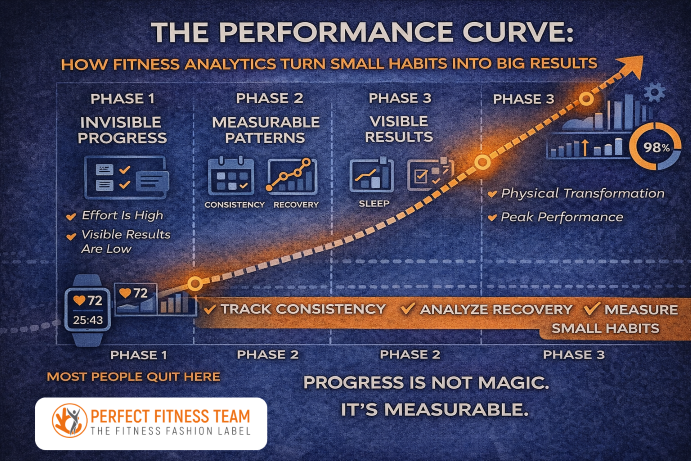
In fitness, results often appear sudden — visible muscle gain, weight loss, improved endurance.
But in reality, progress is rarely sudden.
It follows a curve — slow, steady, and built on small, repeated behaviours over time.
This is what we call the Performance Curve.
At Perfect Fitness Team, we use fitness analytics to map this curve — turning invisible habits into visible progress.
1. Understanding the Performance Curve
The Performance Curve represents how fitness improvements accumulate over time.
It typically follows three phases:
Phase 1: Invisible Progress
Effort is high, visible results are low.
Most people quit here.
Phase 2: Measurable Patterns
Analytics begin to show consistency, recovery, and habit trends.
Phase 3: Visible Results
Physical transformation becomes noticeable.
👉 The key insight:
Results lag behind behaviour. Analytics reveal behaviour early.
2. The Role of Analytics in Early-Stage Progress
In the early stages, traditional feedback (mirror, weight scale) is unreliable.
Analytics provide alternative indicators:
- Workout frequency trends
- Habit completion rates
- Recovery stability
- Sleep consistency
These metrics act as leading indicators of future results.
Without analytics, individuals rely on delayed outcomes.
With analytics, they rely on real-time behavioural feedback.
3. Small Habits, Measurable Impact
Fitness success is not built on big actions.
It is built on small, repeatable behaviours:
- Showing up for workouts
- Maintaining sleep routines
- Following recovery protocols
- Completing daily activity goals
Analytics quantify these behaviours.
For example:
- A 10% increase in weekly consistency can significantly improve long-term adherence
- Stable sleep patterns correlate with improved energy and reduced drop-off
👉 Small improvements, when tracked, compound into significant results.
4. Recovery as a Performance Multiplier
Most people focus on training harder.
Analytics show that performance often improves when individuals recover better.
Key recovery insights include:
- Poor sleep predicts low performance days
- High fatigue correlates with reduced consistency
- Balanced recovery improves training quality
Recovery metrics allow individuals to:
- Avoid burnout
- Maintain sustainable progress
- Improve overall resilience
5. Behaviour Tracking and Identity Formation
Analytics don’t just track actions — they shape identity.
When individuals see:
- Consistent workout streaks
- Stable habit patterns
- Progressive trends
They begin to internalize a new identity:
👉 “I am consistent.”
👉 “I follow through.”
👉 “I am disciplined.”
This identity shift reduces reliance on motivation and builds long-term mental strength.
6. Turning the Curve into Strategy
To leverage fitness analytics effectively:
📊 Focus on weekly trends, not daily fluctuations
📊 Track consistency before optimizing intensity
📊 Monitor recovery alongside performance
📊 Use habit tracking to reinforce identity
📊 Adjust behaviour based on patterns, not emotions
The goal is not perfection — it is pattern stability.
Conclusion: Progress Is a Curve, Not a Moment
Fitness transformation is not about one great workout or one perfect week.
It is about the curve —
the gradual accumulation of disciplined behaviour over time.
At Perfect Fitness Team, we believe analytics make this curve visible.
When you understand the curve:
- You stay consistent longer
- You trust the process
- You build resilience
- You achieve sustainable results
Fitness is not sudden.
It is structured.
And analytics show you the structure.