
Fitness in Numbers: How Analytics Drive Consistency, Resilience & Mental Strength
January 6, 2026
Fitness in Numbers: How Analytics Drive Consistency, Resilience & Mental Strength
January 28, 2026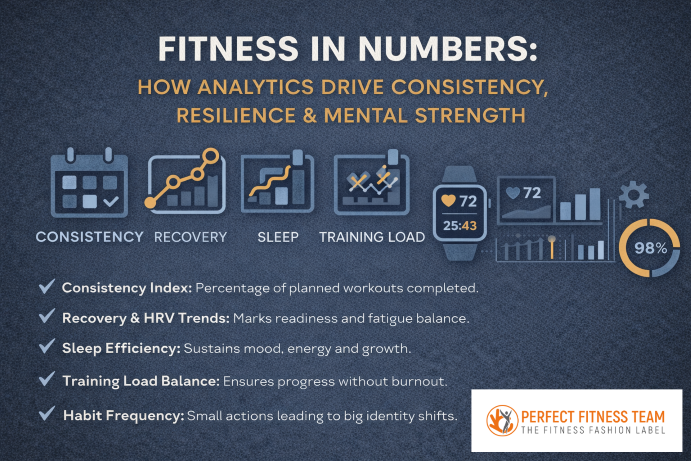
In the age of technology, fitness is no longer a guessing game. It’s a science — and a science rooted in data. From wearable trackers to performance dashboards, fitness analytics have revolutionized how we train, recover, and build sustainable habits that shape our bodies and minds.
At Perfect Fitness Team, we believe that data isn’t just about measurement — it’s about insight, behaviour change, and long-term transformation.
1. The Analytics Advantage: Making Consistency Visible
The most consistent predictor of fitness success isn’t intensity — it’s consistency.
Across platforms like Fitbit, Apple Health, WHOOP, and Garmin:
- Users who track workouts consistently show higher adherence over the long term.
- Training streaks correlate with stronger habit formation.
- Diet, sleep and activity consistency show the best predictors of sustained progress.
Analytics turn consistency — once abstract — into a tangible metric that motivates behaviour.
“What gets measured gets managed.” — Performance science maxim
2. Micro-Metrics Build Macro-Results
Modern fitness analytics don’t just track the workout itself — they track the conditions around the workout:
📊 Recovery Score & HRV
Indicates readiness — high scores predict stronger, sustainable performance; low scores often signal the need for rest.
💤 Sleep Quality
Deep sleepers show better endurance and improved muscle recovery.
📆 Habit Frequency
Small, repeated actions compound into lifestyle changes.
By measuring these micro-metrics, analytics help you train smarter — not harder.
3. Identity Through Data: Analytics Reinforces Who You Are
Behavioural science shows that identity-based habits outperform goal-based habits. The difference?
Goals tell you what you want. Identity tells you who you are.
Fitness analytics help visualize this shift:
- Weekly activity charts tell you: “I show up.”
- Streaks tell you: “I am consistent.”
- Progress curves tell you: “I’m improving.”
When training data reflects who you want to be, discipline grows from the inside out.
4. Data Reinforces Mental Strength
Analytical feedback impacts more than the body — it trains the mind.
Research links structured tracking to:
- Reduced anxiety around progress
- Improved self-regulation
- Better goal planning
- Higher motivation through milestones
Once you stop guessing and start reflecting on data trends, your mindset shifts from wishful thinking to strategic action.
5. Five Metrics That Predict Success
Here are the most predictive analytics for long-term fitness gains:
✔ Consistency Index
Percentage of planned workouts completed.
✔ Recovery & HRV Trends
Marks readiness and fatigue balance.
✔ Sleep Efficiency
Sustains mood, energy and growth.
✔ Training Load Balance
Ensures progress without burnout.
✔ Habit Frequency
Small actions leading to big identity shifts.
Conclusion: Let the Numbers Guide You
Fitness analytics are not about obsessing over charts — they’re about understanding patterns in your behaviour.
When you use data to:
- Track consistency
- Optimize recovery
- Reinforce identity
- Strengthen mental resilience
you’re no longer training blindly — you’re training strategically.
At Perfect Fitness Team, we believe that analytics are not just tools — they’re your fitness compass.
Your data tells a story. Let it guide your growth.