
The Metrics That Make You: How Fitness Data Predicts Discipline, Consistency & Long-Term Success
December 13, 2025
From Guesswork to Growth: How Fitness Analytics Drive Consistency, Resilience & Mental Strength
December 27, 2025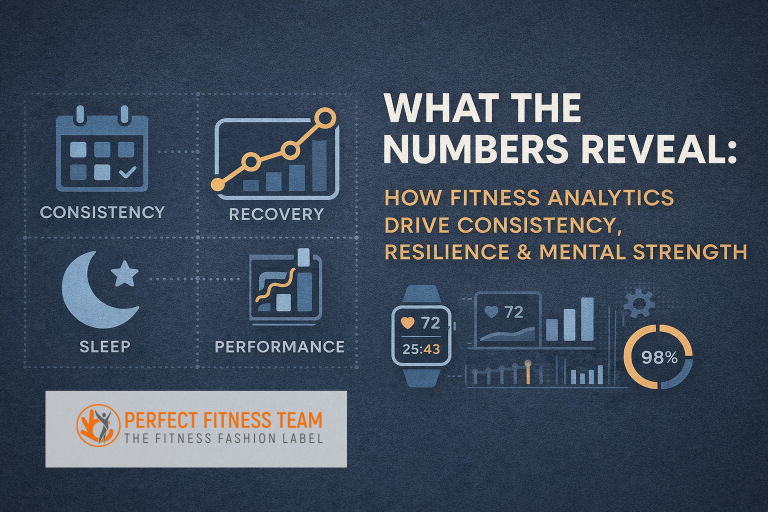
What the Numbers Reveal: How Fitness Analytics Drive Consistency, Resilience & Mental Strength
Fitness has entered a new era. What was once driven by intuition, aesthetics, and motivation is now guided by data, patterns, and measurable behaviour. From wearable devices to training dashboards, analytics have become central to how people train—and more importantly—how they stay consistent.
At Perfect Fitness Team, we don’t just look at results.
We look at what predicts results.
1. Consistency Is the #1 Predictor of Fitness Success (Data Confirms It)
Across fitness platforms and longitudinal studies, one insight appears repeatedly:
Consistency matters more than intensity.
Analytics show that individuals who train 3–4 times per week consistently outperform those who train sporadically at high intensity—across strength, fat loss, cardiovascular health, and mental well-being.
Key behavioural data patterns show:
- Higher workout frequency → higher long-term adherence
- Missed sessions cluster together (one miss predicts the next)
- Consistency curves outperform peak-performance spikes
Fitness analytics convert this insight into action by making consistency visible—and visibility drives accountability.
2. Micro-Metrics Build Macro-Resilience
Modern fitness analytics don’t just track workouts. They track:
- Active minutes
- Rest and recovery
- Sleep quality
- Heart rate trends
- Training load vs fatigue
- Habit completion frequency
These micro-metrics reveal how resilience is built.
For example:
- Declining sleep quality often precedes missed workouts
- Poor recovery scores predict performance drops
- Stable training load predicts reduced injury risk
This means resilience is not built by “pushing harder,” but by responding intelligently to data.
3. Fitness Analytics Shape Identity (Not Just Performance)
Behavioural science shows that identity-based habits are more sustainable than goal-based habits.
Analytics reinforce identity in three ways:
- Proof of effort – dashboards validate consistency
- Pattern recognition – users see themselves as disciplined
- Feedback loops – progress reinforces self-belief
When someone regularly sees:
- Weekly activity graphs
- Training streaks
- Habit completion rates
They stop saying “I’m trying to get fit” and start saying:
“I am someone who trains consistently.”
That identity shift is the foundation of long-term success.
4. Mental Strength Is Measurable (And Trainable)
Mental strength is often treated as abstract—but analytics make it tangible.
Data trends show:
- Routine tracking improves emotional regulation
- Structured training reduces decision fatigue
- Predictability lowers anxiety around progress
- Measured recovery supports sustainable discipline
Fitness analytics don’t just build bodies—they build self-control, patience, and resilience.
Mental strength, like physical strength, improves when it is:
- Tracked
- Reflected upon
- Repeated consistently
5. The Five Metrics That Matter Most
Based on behavioural and performance data, these metrics most strongly predict success:
1. Consistency Score
Number of active training days per month.
2. Recovery / HRV Trends
Predict energy, burnout, and injury risk.
3. Training Load Balance
Ensures sustainable progress without overload.
4. Sleep Quality
Strongest predictor of performance and mood.
5. Habit Frequency
Daily small actions that compound into identity.
These metrics don’t just measure performance—they shape behaviour.
Conclusion: Data Builds Discipline
Fitness analytics are not about obsession with numbers.
They are about clarity, awareness, and intelligent action.
Data shows you:
- Where you’re consistent
- Where you’re slipping
- When to push
- When to recover
- How your habits are shaping who you become
At Perfect Fitness Team, we believe the strongest transformations happen when discipline is informed by data.
Your data is your mirror.
Your habits are your signal.
Your consistency is your competitive advantage.