
The Data Behind Discipline: How Fitness Analytics Shape Identity, Resilience & Mental Strength
December 6, 2025
What the Numbers Reveal: How Fitness Analytics Drive Consistency, Resilience & Mental Strength
December 20, 2025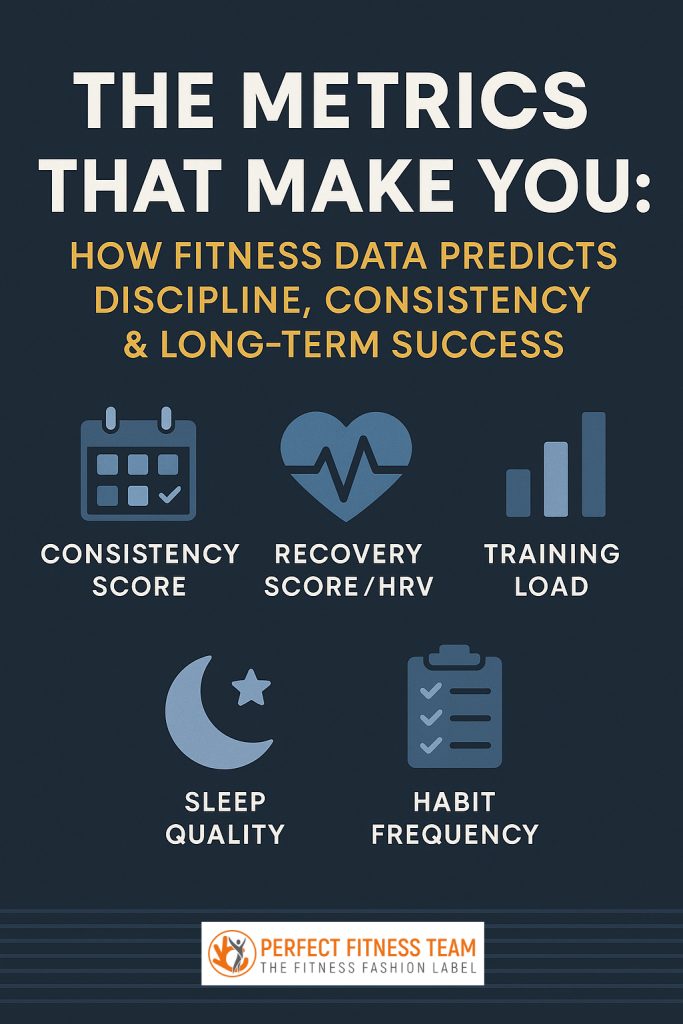
In the modern fitness world, data has become one of the most powerful predictors of transformation. Whether you’re tracking heart rate, calories, training frequency, sleep quality, or recovery scores—analytics now shape how people train, how they think, and ultimately, how well they stay consistent.
At Perfect Fitness Team, we’ve seen a clear trend:
People who track their fitness data are significantly more consistent than those who don’t.
Let’s break down how fitness analytics reshape discipline, identity, and long-term success.
1. Consistency Is No Longer Guesswork — Data Proves It
Wearable technology and fitness apps now analyze:
- Training frequency
- Intensity distribution
- Habit completion rates
- Sleep cycles
- Daily movement patterns
- Stress and recovery levels
Global reports from major platforms show:
- ⭐ FuelBand & Fitbit found that users who tracked workouts for 30+ days increased long-term adherence by up to 42%.
- ⭐ WHOOP’s 2024 data reveals that users who monitor recovery metrics are 33% less likely to skip workouts.
This proves that visibility drives accountability.
When your behaviour is measured, it becomes harder to break the chain.
2. Micro-Trends Predict Who Stays Consistent
Fitness analytics tools identify “micro-trends,” which are tiny behavioural patterns that indicate future performance.
For example:
- A drop in weekly step count often predicts a dip in training intensity.
- Decreasing sleep quality is correlated with reduced strength output.
- A decline in HRV (Heart Rate Variability) predicts burnout or stress.
The beauty of analytics?
👉 You can course-correct before habits collapse.
That’s how elite athletes stay consistent—and now everyday users can too.
3. Fitness Data Helps Build Identity — The Strongest Driver of Discipline
Behavioural science says:
“Identity-based habits are more powerful than goal-based habits.”
Analytics reinforce that identity by giving proof of your actions:
- Seeing your monthly progress graph strengthens your belief:
“I am someone who trains consistently.” - Watching your running pace improve tells you:
“I am getting stronger.” - Getting rewarded by streaks builds internal motivation:
“I am disciplined.”
This is why fitness data does more than track progress—it reshapes who you believe you are.
4. The Psychology Behind Fitness Metrics
Recent wellness analytics research shows:
- 📉 Tracking reduces anxiety by 18–25% because it gives clarity.
- 📈 Gamified analytics (streaks, badges) increase adherence by 40%.
- 🔁 Data visualisation boosts motivation by making progress feel tangible.
Even simple metrics—like daily movement rings or step targets—activate the brain’s reward systems.
Every time you close the ring or hit your streak, dopamine reinforces discipline.
5. The Metrics That Matter Most
Here are the high-impact metrics that predict long-term success:
✔ Consistency Score
Your most important metric — number of training days per month.
✔ Recovery Score / HRV
Predicts performance, energy, and burnout risk.
✔ Training Load
Helps balance intensity vs. recovery.
✔ Sleep Quality
The strongest predictor of mood, strength output, and discipline.
✔ Habit Frequency
Small behaviours compound into massive change.
When tracked weekly, these metrics give you a roadmap to build a resilient, disciplined version of yourself.
Conclusion: Data Doesn’t Just Measure You — It Improves You
Fitness analytics are not just numbers on a screen. They are a mirror of your habits, identity, consistency, and resilience.
If you want to transform your body, you must transform your consistency.
If you want to transform your consistency, you must transform your data awareness.
At Perfect Fitness Team, we help you understand the metrics that matter — and build a lifestyle that lasts.
Your data is your blueprint.
Your habits are your foundation.
Your transformation is the outcome.