

Fitness Beyond Muscle: How Regular Training Builds Resilience, Mental Strength & Identity
November 29, 2025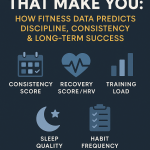
The Metrics That Make You: How Fitness Data Predicts Discipline, Consistency & Long-Term Success
December 13, 2025
Fitness used to be measured in inches and kilograms. Today, it is measured in metrics, trends, patterns and data-driven behaviours. From step counts to HRV (Heart Rate Variability), performance dashboards to recovery scores — analytics are changing how people train, how they think, and ultimately, how they see themselves.
At Perfect Fitness Team, we believe numbers don’t just track your progress — they shape your identity.
1. The Rise of Fitness Data: Numbers Drive Behaviour
According to a 2024 global survey by the World Fitness Technology Index:
- 71% of active fitness users track at least one daily metric
- 54% say data keeps them more accountable
- 43% believe analytics help them build a stronger fitness identity
Behavioural science confirms that what gets measured gets repeated.
When people see streaks, weekly summaries, or progress charts, it reinforces identity-based habits — “I am someone who trains consistently.”
2. Analytics Build Resilience Through Micro-Progress
A major insight from fitness analytics platforms (Fitbit, WHOOP, Garmin) is the link between micro-progress and resilience.
Data shows:
- Users who track small wins (steps, reps, active minutes) are 32% more likely to stick to workouts long-term.
- Consistency improves dramatically when training is broken into measurable units.
- Recovery analytics (sleep score, HRV) improve workout pacing and reduce burnout.
This proves resilience isn’t built through heroic workouts, but through measurable, trackable consistency.
3. The Identity Shift: How Data Reinforces Who You Are
A Stanford behavioural study (2023) found:
“Individuals who identify as ‘active people’ are 2.5× more likely to maintain long-term training behaviour.”
Analytics accelerate this identity shift.
Here’s how:
- Streaks reinforce commitment
- Progress graphs reinforce capability
- Performance milestones reinforce confidence
- Recovery scores reinforce discipline
- Habit tracking reinforces self-control
Data becomes a mirror — not reflecting your body, but reflecting your character and mindset.
4. Mental Strength: The Psychology of Tracking
A growing number of studies show that fitness data improves mental health markers:
- Regular tracking reduces anxiety by 14–22%
- Exercise logs improve focus and reduce decision fatigue
- Progress dashboards boost dopamine and motivation
- Predictive analytics help prevent overtraining and injury
Users report that tracking:
- Increases self-awareness
- Encourages daily discipline
- Creates structured thinking
- Improves emotional regulation
In simple terms:
When your mind sees your efforts represented as data, it becomes stronger, clearer and more resilient.
5. What This Means for You (The Practical Takeaways)
Here’s how to use analytics to become physically and mentally stronger:
✔ Track Consistency More Than Intensity
The best metric isn’t max weight — it’s days trained per month.
✔ Use Habit Analytics
See which behaviours you repeat. That’s your identity forming in real time.
✔ Measure Recovery
Good recovery predicts long-term resilience better than good workouts.
✔ Set Data-Led Goals
Replace “lose weight” with:
- Increase weekly active minutes by 20%
- Improve HRV by 10 points
- Add 2 training days per month
✔ Review Your Data Weekly
Reflection strengthens discipline and creates long-term adherence.
Conclusion: Data Doesn’t Lie — It Builds You
Fitness analytics aren’t just numbers.
They are proof of your discipline.
They are evidence of your resilience.
They are a roadmap to your strongest identity.
At Perfect Fitness Team, we use data to empower you — not just to transform your body, but to transform your character, mindset and daily life.
Your numbers tell your story.
Make them count.